The Niche: “Safari Skylights”
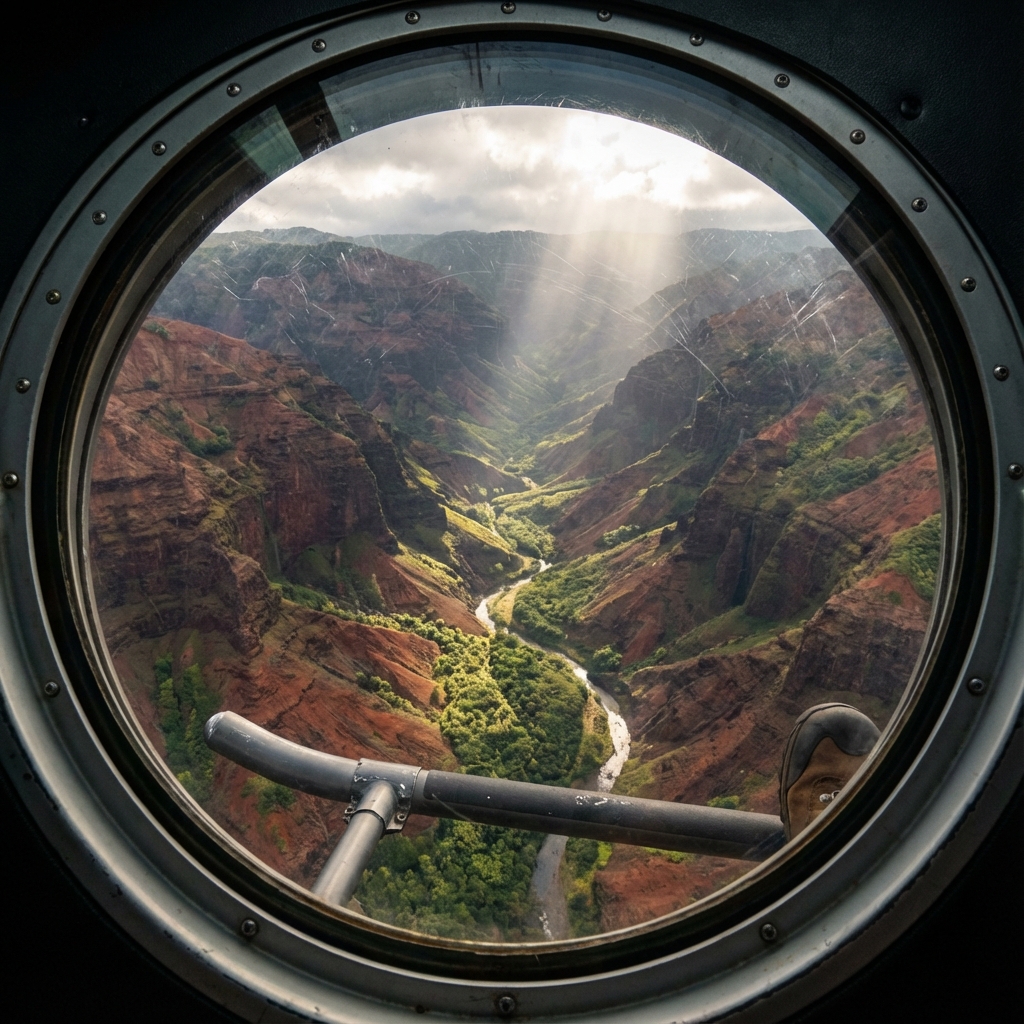
Safari Helicopters competes in the packed AS350 market with one primary differentiator: Floor Windows. They have modified their fleet with “Safari Skylights,” which are downward-facing windows allowing you to look directly between your feet.
Why It Matters
In the deep cuts of the Waimea Canyon, the verticality is immense. Being able to look straight down adds a dimension of depth that standard windows miss.
- The Pro: Unique perspective on the canyon floor.
- The Con: It can be disorienting for those afraid of heights.
Safety Context: The 2019 Tragedy
We cannot review Safari Helicopters without addressing the elephant in the room. On December 26, 2019, a Safari AS350 B2 crashed into a cliff in Kokee State Park, killing all 7 on board.
- The Cause: The NTSB investigation cited the pilot’s decision to fly VFR into IMC (Visual Flight Rules flight into Instrument Meteorological Conditions). Essentially, flying into clouds/fog where visibility was lost.
- The Lesson: This accident highlights the extreme importance of weather cancellations.
Why We Urge Caution
While the company is Part 135 certified and uses turbine aircraft, the “mission mentality” cited in the NTSB report is a red flag for cautious travelers. If you fly with them, do so with the understanding of this history.
The Pilot Profile: “Military Grade”
Safari marketing emphasizes the founder’s background in Southeast Asia military operations (Air America). They often hire high-time pilots. For some, this “rugged” culture is a plus; for others, the 2019 incident suggests it may have contributed to risk-taking behavior.
Pricing
- Advertised: ~$334
- Value: Mid-tier. Cheaper than Blue Hawaiian, but lacks the modern safety infrastructure (SMS/TOPS) of the market leader.