The Golden Question: AM or PM?
If your goal is to capture the “Postcard Shot” of the Napali Coast, timing is everything. Because the cliffs face Northwest, they are in shadow during the early morning.
The Afternoon Window (1:00 PM – 3:00 PM)
- The Light: The sun moves West, shining directly onto the “Cathedral” cliffs. This illuminates the deep reds and vibrant greens of the ridges.
- The Ocean: Overhead sun makes the turquoise water “pop” more than the low-angle morning sun.
- The Catch: This is also the windiest time of day. Expect a bumpier ride and more mechanical turbulence in the canyons.
The Morning Window (8:00 AM – 10:00 AM)
- The Light: Best for the Interior Waterfalls (like Mt. Waialeale). The sun is low in the East, reaching deep into the amphitheater valleys before clouds typically form at midday.
- The Ride: Generally smoother air. Recommended if you are sensitive to motion sickness.
Doors-Off vs. Doors-On for Photography
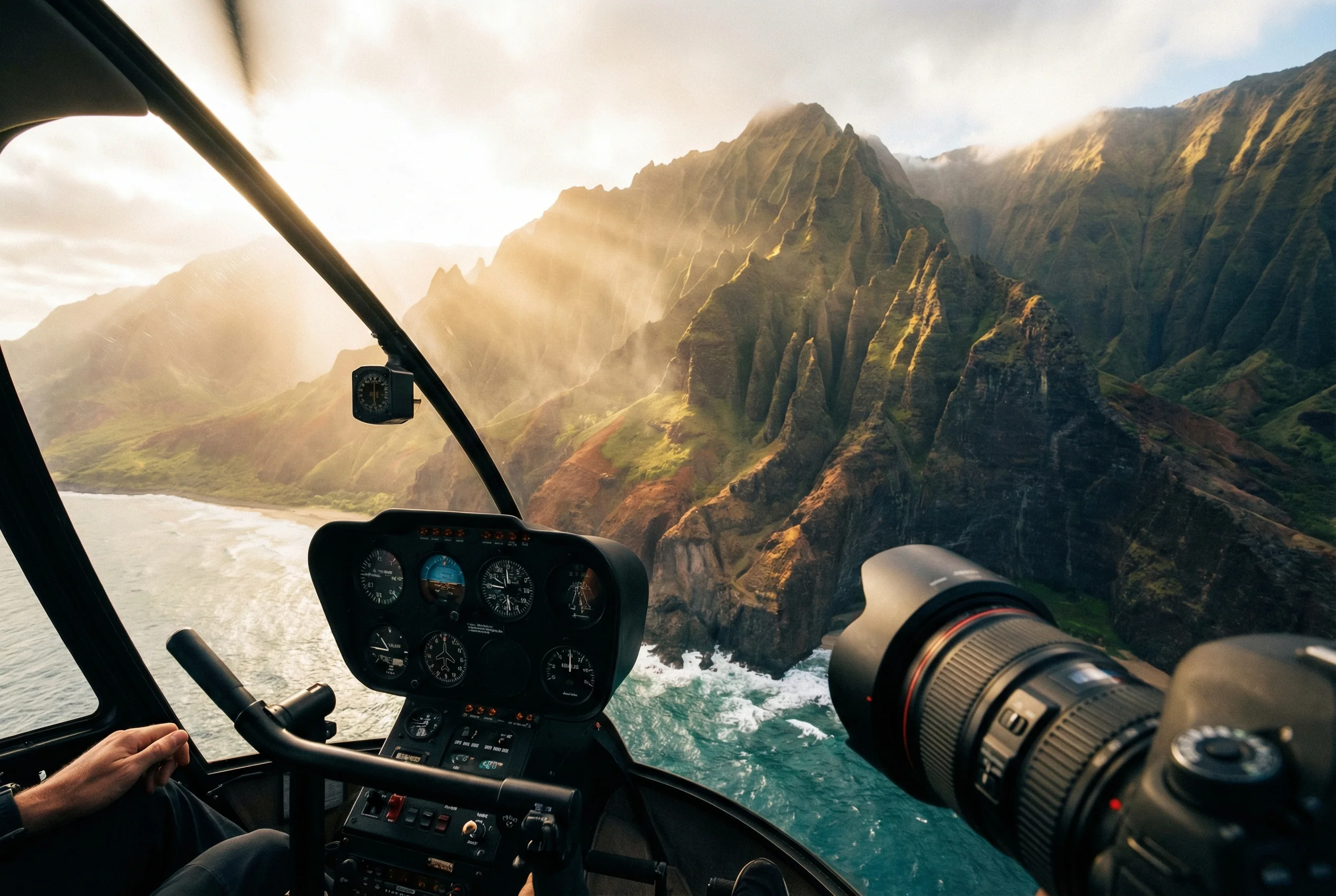
There is no middle ground here. For serious photography, Doors-Off is the only choice.
- Glare: Helicopter windows are curved Plexiglas. Even with dark clothing, you will struggle with internal reflections and “hazing” from scratches in the glass.
- Vibration: Modern turbine helicopters (like the Hughes 500) have high-frequency rotor systems. Shooting through an open door allows you to use slightly slower shutter speeds without glass refraction messing with your autofocus.
Technical Setup
Go Wide. A 16-35mm or 24-70mm (on full-frame) is ideal. Do NOT bring a 70-200mm on a doors-off flight; the wind resistance will make the lens physically difficult to hold and can pull you toward the door.Quick Tips for High-Speed Skies
- Shutter Speed: Minimum 1/1000s or faster to combat rotor vibration.
- Lens Tether: If flying doors-off, simplify your life. Tape your zoom ring to your desired focal length and use a heavy-duty wrist strap.
- Wear Dark Colors: If you must fly with doors on, wear black. This reduces your own reflection on the glass.