Kauai Helicopter Safety Audit (2025)
Part 135 vs Part 91, TOPS certification, and the reality of aviation risk in Kauai.
The Reality of Risk
Kauai is not Disneyland. It is a high-wind, high-mountain environment. Safety is not guaranteed.
Turbine vs. Piston
- Turbine (Jet Engine): Used by Blue Hawaiian, Jack Harter, Island. High reliability, high power-to-weight ratio. Can power out of downdrafts 1.
- Piston (Car Engine): Used by R44 operators. Susceptible to “mast bumping” in turbulence. Higher Risk.
Expert Opinion: David Kealoha
"In Kauai's trade-wind environment, the difference between a turbine engine and a piston engine isn't just about speed; it's about the ability to maintain rotor RPM in a sudden downdraft. I always advise my family to fly turbine only."Regulatory Tiers
- TOPS (Tour Operators Program of Safety): A voluntary standard exceeding FAA rules. Blue Hawaiian is the only confirmed regular member in Kauai 2.
- Part 135 (Air Carrier): The legal standard for commercial tours. Requires strict maintenance and pilot rest.
- Part 91 (General Aviation): “Instructional” or private flights. Less oversight. Avoid.
The 2024 “Year of Warning” for Ali’i
February 27, 2024: An Ali’i MD500 (N633JH) experienced an engine failure and executed a hard forced landing at Honopu Beach. One passenger was seriously injured. July 11, 2024: An Ali’i R44 (N144KW) crashed into the ocean, killing three.
The crash of an Ali’i R44 in July 2024 highlighted the vulnerability of light piston aircraft in Kauai’s microclimates. The NTSB investigation is ongoing 3, but the lesson is clear: Size and power matter.
The 2019 Safari Tragedy: “VFR into IMC”
On December 26, 2019, an AS350 B2 operated by Safari Helicopters flew into a cloud layer near Kokee State Park, impacting a cliff face. Seven people died. The NTSB cited the pilot’s decision to continue Visual Flight Rules (VFR) flight into Instrument Meteorological Conditions (IMC).
The Lesson: If an operator cancels your flight due to “clouds” when it looks sunny at your hotel, thank them. They are respecting the “VFR into IMC” trap that killed 7 people.
The Invisible Filter: Part 135 vs. Part 91
Not all “commercial” flights are created equal.
- Part 135 (Air Carrier): The strict standard. Mandatory pilot rest periods, drug testing, and rigorous maintenance schedules. (Blue Hawaiian, Jack Harter, Island).
- Part 91 (General Aviation): Often used for “instructional” or private flights. These have significantly less FAA oversight.
Technical Deep Dive: “Mast Bumping”
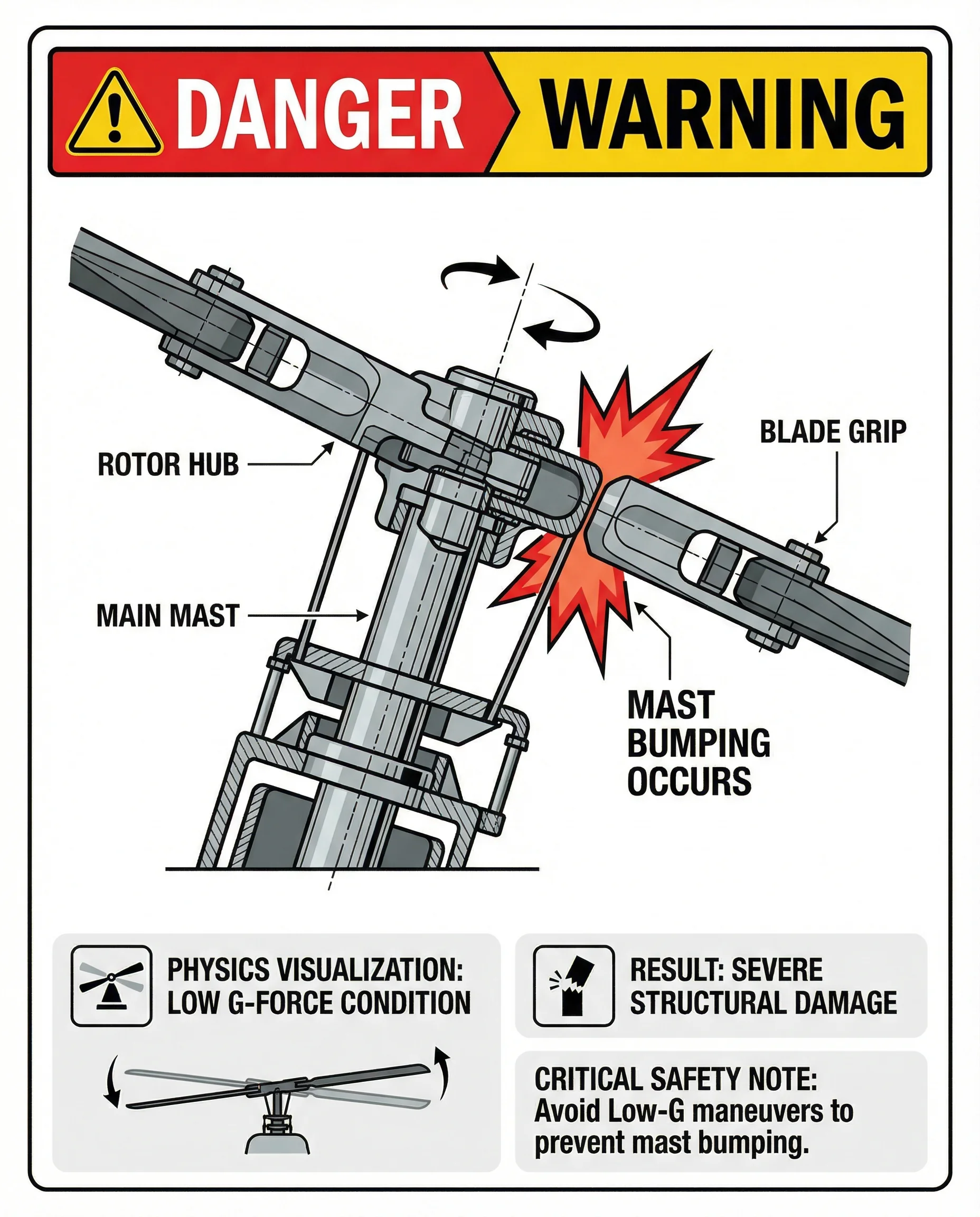
Why do we warn against the Robinson R44? It uses a “teetering” two-blade rotor system. In low-G conditions (the feeling of weightlessness you get when going over a hump), the fuselage can tilt independently of the rotor disc. If the pilot corrects incorrectly, the rotor hub can strike the main mast, causing the helicopter to break apart in mid-air. This is a known risk profile specific to this design in turbulent air.
- FAA Aviation Safety Handbook, Chapter 13: Helicopter Systems & Reliability.
- Tour Operators Program of Safety (TOPS) Membership Directory, 2024.
- NTSB Preliminary Report ANC24FA061 (Ali'i Air Tours).